Choosing a neighbourhood when you work from home
If you work from home, the axis you pick an area on changes. Why the place name settles less than it looks, and why office-use permission cannot be filtered on a map.
Neighbourhood guides are almost always sorted by liveability. Good shops, safe streets, close to the station. If you commute somewhere every morning, that is the right sort.
Spend most of the day inside the room and the axis changes. With no commute, distance from the station is worth less, and whether there is a second room is worth a great deal more. That trade is mostly settled at the moment you pick an area, which is why it deserves thinking about first.
The same total buys very different floor areas depending on the neighbourhood. And a single room means the place you sleep and the place you work are the same place. For a month that is nothing. At a year it is something. The only real question is whether you make that call before choosing the area or after.
Famous place names are less reliable than they look
Sort by cost per square metre and name-brand rooms routinely come in cheaper than rooms in quieter places. The reason is mundane: the building matters more than the place name. A small older building and a large new one price differently on the same street. “Famous area, therefore expensive” and “quiet area, therefore cheap” both fall apart as soon as you compare actual rooms.
That lesson came from scouting buildings in person, and it generalises: a well-known building does not imply a good room in it. The address and the apartment are two separate questions.
Rooms that permit office use cannot be found by area
The condition people working from home most want to know — can clients visit, will company registration go through — scatters almost independently of neighbourhood character.
Rooms that permit office use turn up in central and peripheral wards in roughly equal measure. They do not cluster by ward, and the ones that clear company registration as well are rarer still.
No map or station filter will find this. It is decided property by property, by the landlord and the managing company, and it appears nowhere except the terms box on the listing sheet. Which means the search order inverts: rather than narrowing by area and then checking conditions, narrow by condition and then look at where the survivors happen to be.
What to settle before picking an area
Working from home, the order goes like this.
- One room or two. This decides your budget and your area at the same time
- Is there a wall you can put a desk against. Count it on the floor plan, not the photos, subtracting windows and storage
- How many sides get light. Two-sided light genuinely matters if you are home all day and barely registers if you are out from morning to night
Those three are unpacked further in What “SOHO” means in Japanese rental listings.
Terms are set property by property and they do change. Talk to us before making a decision on any specific room.
If you would rather fix the budget and then see what it buys, start with the rooms below. Rent and floor area are both in the terms table on every one.
This is a general explanation of how things work in practice, not legal or tax advice. Terms vary by property, landlord and guarantor company. Always check your own case with us.
Rooms mentioned in this article
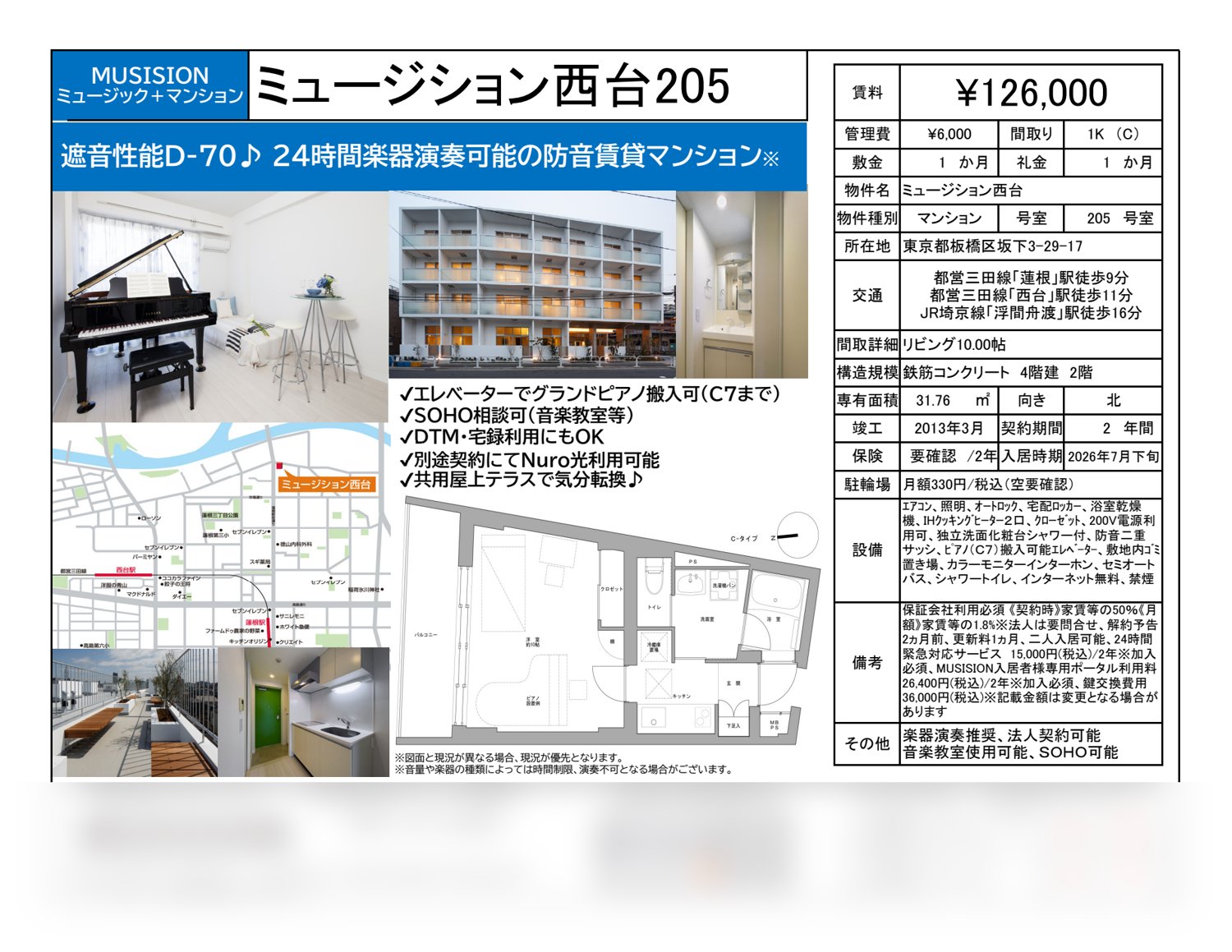 Musision Nishidai 205A soundproofed 1K you can play in any hour, grand-piano access¥126,000/mo
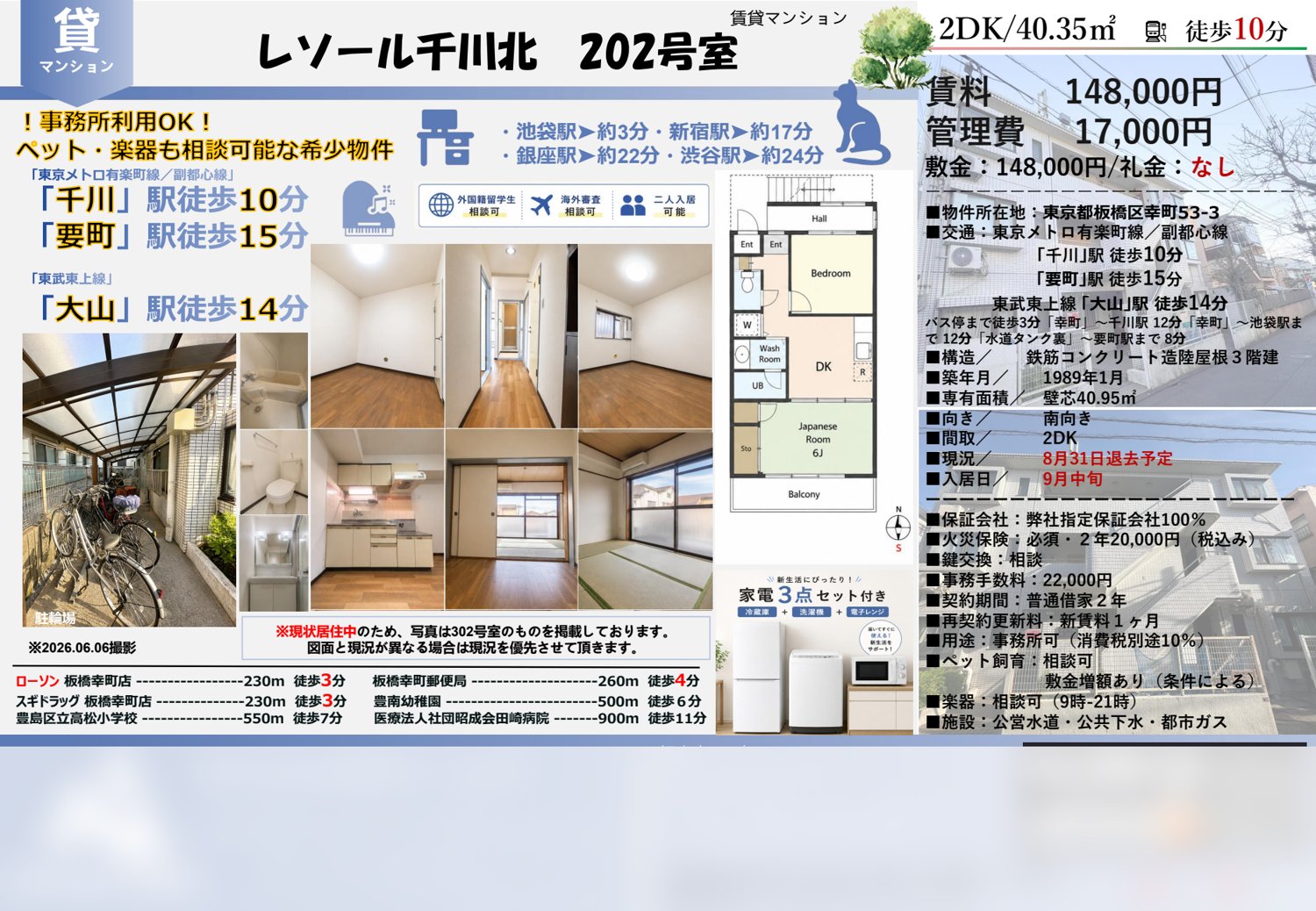 Lesol Senkawa-Kita 202A south-facing 2DK open to pets and instruments, 3 min to Ikebukuro¥148,000/mo
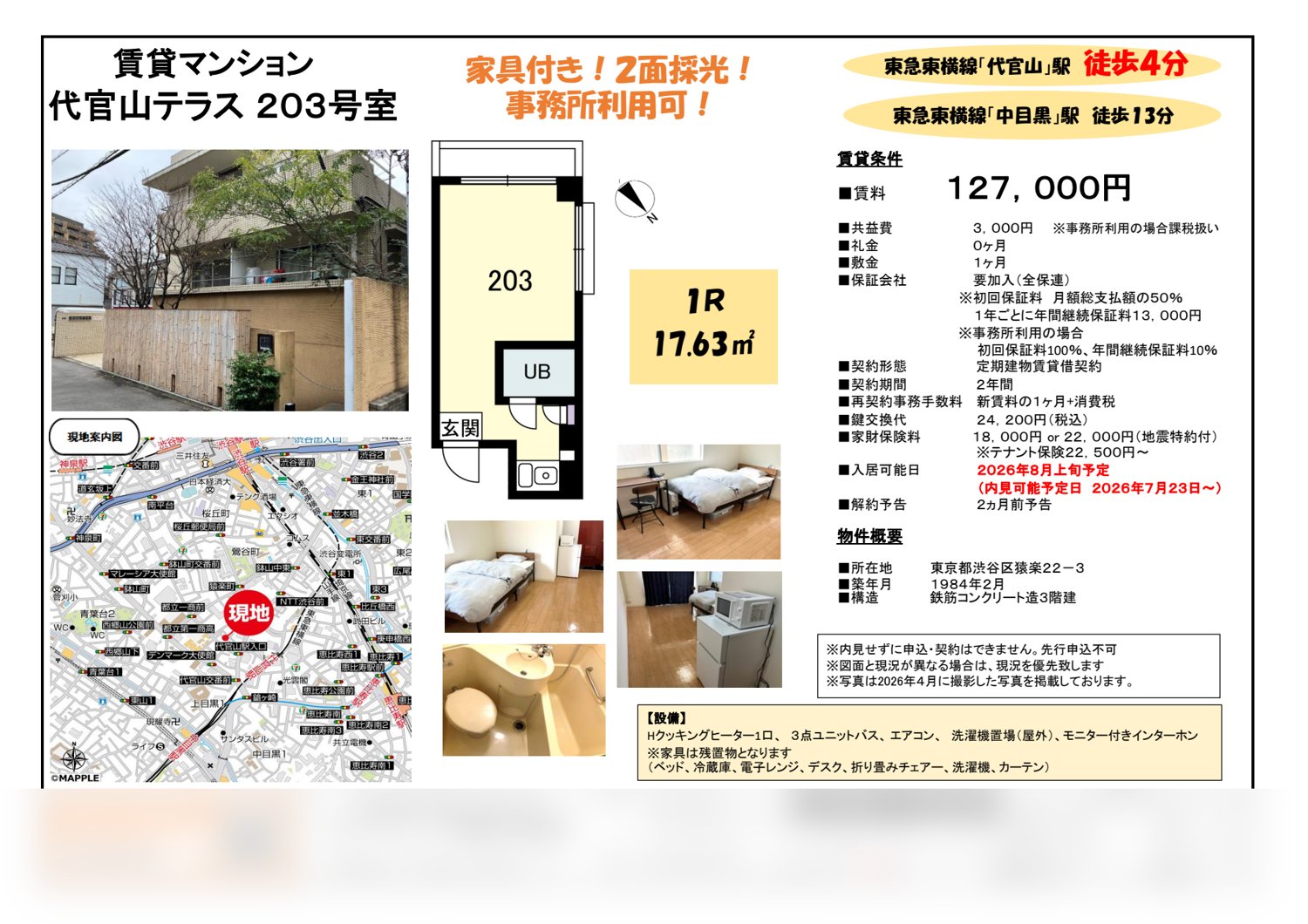 Daikanyama Terrace 203A 17m² 1R in Daikanyama that doubles as a workspace (furnished)¥127,000/mo
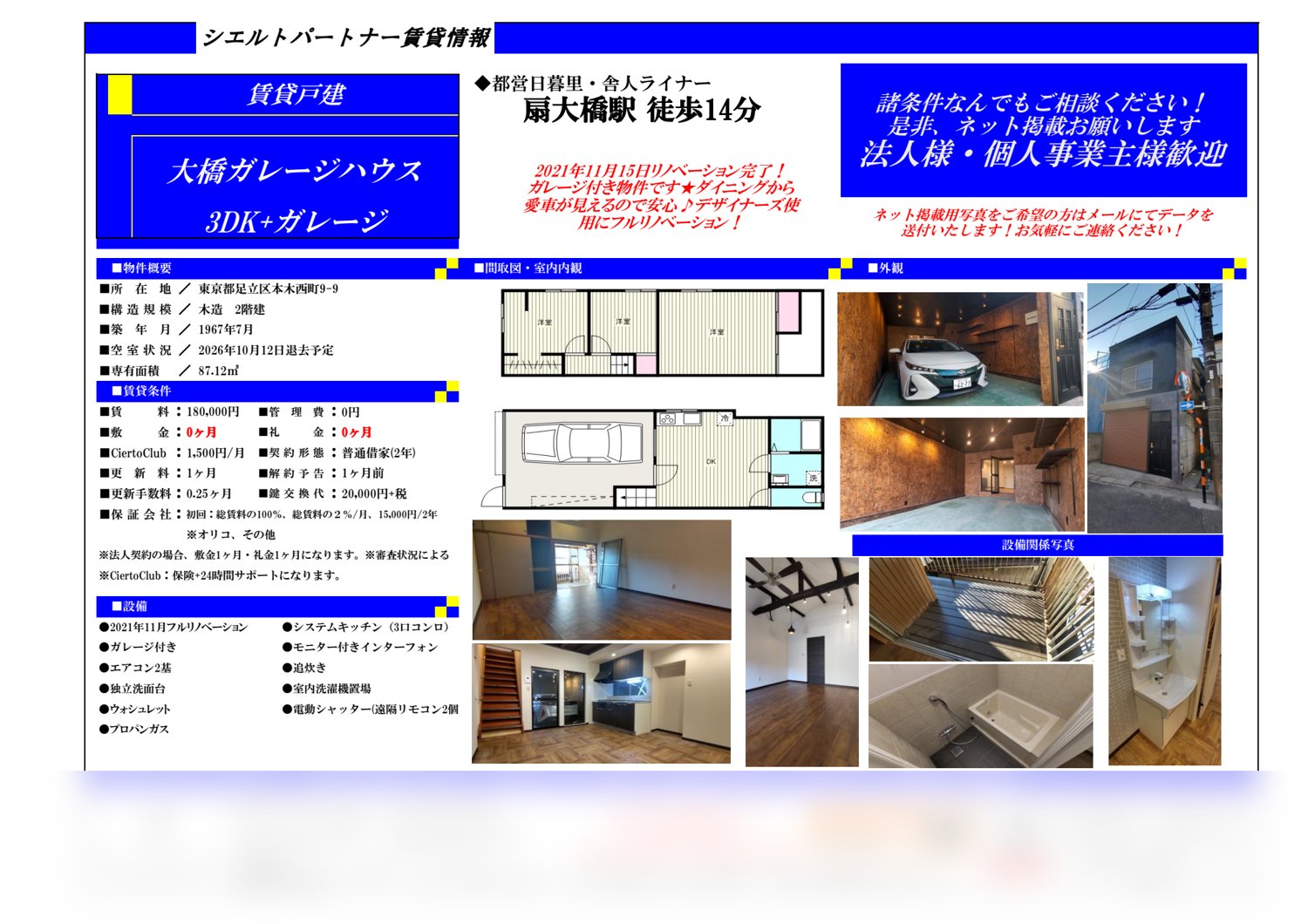 Ohashi Garage HouseA renovated 3DK house with a powered-shutter garage¥180,000/mo